
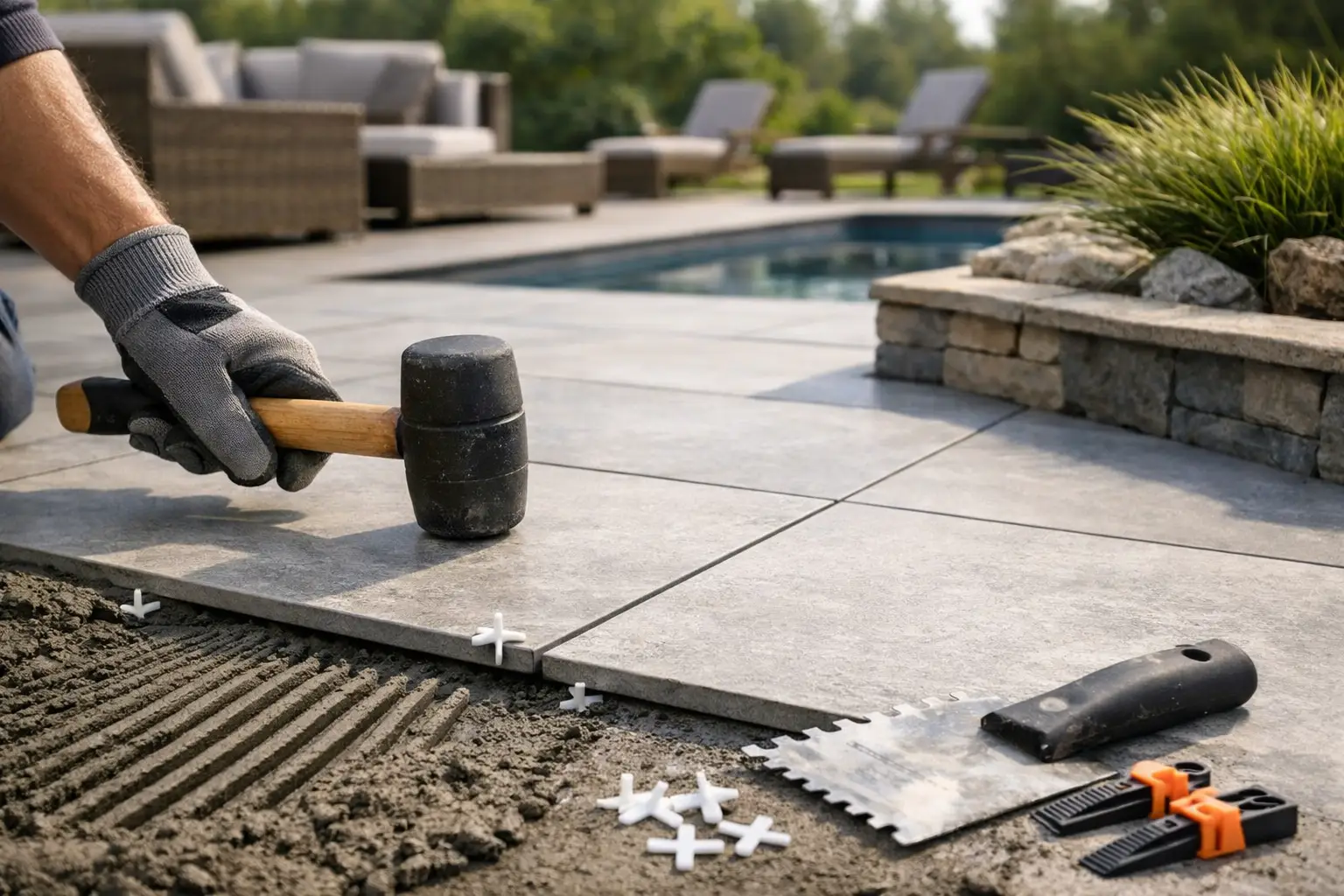
A beautiful patio can look finished for a few months and still fail when Florida’s heat, rain, and settling concrete expose shortcuts underneath. Outdoor porcelain tile installation is not just about choosing a tile that looks great beside your pool or under your lanai. It is about building a surface that drains correctly, bonds to a stable base, handles movement, and stays safe to walk on after a summer storm.
For Tampa Bay homeowners, the details matter. A covered lanai has different needs than an exposed pool deck. A new concrete slab behaves differently than an older patio with cracks, low spots, or a coating that must be removed. The best result starts with an honest look at the site before the first tile is set.
Why Porcelain Works So Well Outside
Porcelain is a strong choice for exterior spaces because it is dense, low-absorption, and built to handle moisture better than many other finish materials. Quality outdoor-rated porcelain will not readily absorb water, which helps it resist staining, mold growth, and damage from repeated rain exposure. It also gives homeowners the look of natural stone, wood, concrete, or large-format modern tile without the same level of ongoing sealing and maintenance.
That does not mean every porcelain tile belongs outdoors. The tile must be rated for exterior use, and its finish should fit the location. Smooth, polished porcelain may look sharp in a covered outdoor kitchen, but it can become slippery near a pool, entry, or uncovered patio. A matte, textured, or grip-rated finish is usually the smarter choice where bare feet, splashing water, and rain are part of daily life.
Discover Seven Golden Floors: Tampa Bays Best in Flooring and Remodeling!.
Visit us at The Noble Floors Wholesale – 6131 Anderson Rd, Tampa, FL, 33634, and explore our high-quality flooring and remodeling products. Contact us today and transform your space!
Talk to a salespersonColor deserves some thought, too. Dark tile can become hot under direct Florida sun. Lighter colors tend to stay more comfortable around pool areas, although they may show dirt and leaf stains more easily. There is no one right answer – it depends on sun exposure, surrounding landscaping, how the space is used, and how much maintenance the owner wants.
Outdoor Porcelain Tile Installation Starts Below the Tile
The tile is the visible finish, but the slab underneath determines whether the project holds up. Concrete patios and lanais often have hairline cracks, uneven areas, old thinset, paint, coatings, or moisture-related issues that need to be addressed. Covering those conditions without proper preparation can lead to hollow spots, loose tile, cracked grout, or standing water where it should not be.
A professional crew begins by inspecting the concrete for soundness and slope. Loose material, contaminants, and failed finishes must be removed so the installation system can bond correctly. Depending on the condition of the slab, preparation may include demolition, grinding, patching, crack treatment, leveling, or creating a suitable slope.
This is where homeowners should be cautious about the lowest bid. Exterior prep is labor-intensive, and it is often the first thing cut when an installer prices a job too quickly. A clean tile layout cannot fix a slab that holds water or moves excessively. Perfectionists spend the time on the parts you may never see because those are the parts that protect the finished surface.
Drainage Is Not Optional
Outdoor tile needs a clear path for water to move away from the home and off the surface. On a patio or lanai, the existing slab should generally slope away from the structure toward an appropriate drainage point. Around a pool, drainage needs to work with deck elevation, coping, channels, and surrounding landscaping.
Even a minor low spot can become a problem. Water that ponds leaves mineral residue, encourages algae, and creates a slip hazard. It can also expose grout and setting materials to more moisture than they were designed to handle. Before installation, the crew should identify where water currently collects and decide whether the surface can be corrected with proper patching, mortar work, or another drainage solution.
Door thresholds are another critical detail. Raising a patio with tile changes the finished height at sliding doors, exterior doors, and transitions to pavers or lawn. The tile system must be planned so water does not run toward the house or create an awkward step. These are not finishing details to solve at the end. They should be considered during the estimate and layout stage.
The Right Materials Protect the Finished Surface
Outdoor projects need an installation system designed for outdoor conditions. That includes an exterior-rated thinset mortar, appropriate grout, movement joints, and properly selected sealants at changes of plane. Indoor materials are not automatically suitable just because they are labeled for tile.
Florida concrete expands and contracts with temperature changes, and exterior surfaces receive direct heat, rain, and moisture vapor. Tile itself moves differently from concrete. Movement joints give the assembly room to respond instead of forcing stress into the tile or grout. They are especially important along walls, columns, steps, perimeter edges, and large uninterrupted tile fields.
Grout selection also affects performance and upkeep. A quality grout installed with consistent, tight joints gives the surface a polished look while helping keep routine cleaning manageable. The exact joint width should follow the tile’s size variation, edge type, layout, and manufacturer requirements. Rectified porcelain can often use narrower joints, but narrow does not mean rushed. Straight lines, full coverage, clean cuts, and properly finished edges are what make an outdoor tile project look expensive.
Layout Makes the Space Look Intentional
Large-format porcelain is popular for patios and pool areas because fewer grout lines can make the space feel wider and more modern. It also demands a flatter substrate and a more careful installation. If the slab is uneven, large tiles can create lippage – noticeable height differences from one tile edge to the next. That is uncomfortable underfoot and stands out even more when sunlight hits the surface at an angle.
The layout should be established before setting begins. A skilled installer considers the main view from the home, the direction of walkways, door openings, perimeter cuts, drain locations, and how tile lines meet steps or pool coping. Full pieces should land in the areas people notice most whenever possible. Small slivers at a wall, random cut lines, or mismatched transitions can make premium porcelain look like an afterthought.
For wood-look porcelain, plank direction changes the feel of the space. Running planks away from the house can visually lengthen a narrow lanai, while a different orientation may better connect the patio to an interior room. With stone-look tiles, pattern and shade blending need attention before installation so the finished field looks natural rather than repetitive.
Pool Decks, Lanais, and Patios Have Different Demands
A pool deck must prioritize slip resistance, drainage, comfortable surface temperature, and clean transitions around coping and drains. Tile selection matters as much as installation. A tile that looks excellent in a showroom may be too slick or too hot for a sun-facing deck.
Covered lanais are generally protected from direct rain but are not automatically simple installations. Wind-driven rain, humidity, grill grease, and frequent traffic still affect the surface. Lanais also often connect directly to interior flooring, which makes threshold height and visual transitions especially important.
An open patio may face the most exposure. Sun, heavy rainfall, debris, furniture movement, and plant irrigation all add wear. In these areas, durable porcelain with a practical texture and a well-planned drainage slope will usually serve better than a delicate finish selected only for appearance.
What a Professional Installation Should Include
Homeowners should expect clear communication about demolition, slab conditions, material needs, schedule, and what happens if hidden issues are uncovered. Exterior work can reveal surprises after old pavers, coatings, or tile are removed. The right contractor explains the condition, shows the issue, and recommends a repair instead of burying it under new material.
A professional outdoor tile project also includes careful protection of nearby areas, organized demolition and debris removal, precise cuts around posts and fixtures, and a final cleanup that lets you enjoy the space right away. The finished work should feel solid underfoot, drain as planned, and have clean perimeter details that look finished from every angle.
Seven Golden Floors approaches exterior tile with the same hands-on craftsmanship used for interior flooring and bathroom remodeling. From slab preparation and repair work to detailed layout and final grout cleanup, the goal is a finished space homeowners are proud to show their family and guests.
Care That Keeps Outdoor Porcelain Looking Its Best
Porcelain is low maintenance, not no maintenance. Sweep away leaves, sand, and dirt so they do not become abrasive under furniture or foot traffic. Wash the surface periodically with a cleaner appropriate for porcelain and grout, then rinse thoroughly. Avoid harsh acids or aggressive pressure-washing techniques that can damage grout, sealant joints, or nearby finishes.
Check perimeter sealant and movement joints occasionally, especially after major storms or several seasons of heat. If grout cracks, tiles sound hollow, or water begins collecting in a new area, address it early. Small repairs are far easier before moisture and movement affect a larger section of the installation.
The right porcelain can give your patio, lanai, or pool area a sharp, durable finish for years. Start with the surface beneath it, plan for Florida weather, and choose an installer who treats drainage, prep, and clean details as part of the job – not extras.
Discover Seven Golden Floors: Tampa Bays Best in Flooring and Remodeling!.
Visit us at The Noble Floors Wholesale – 6131 Anderson Rd, Tampa, FL, 33634, and explore our high-quality flooring and remodeling products. Contact us today and transform your space!
Talk to a salesperson

